
Astrid Naranjo, APD
Meet Astrid Naranjo
Accredited Practising Dietitian. Clinical dietitian. Fitness coach. Evidence-based educator.
My work sits between worlds that are too often separated in women’s health and weight management: clinical nutrition, strength training, body composition, behaviour change and the messy psychology of actually living with food.
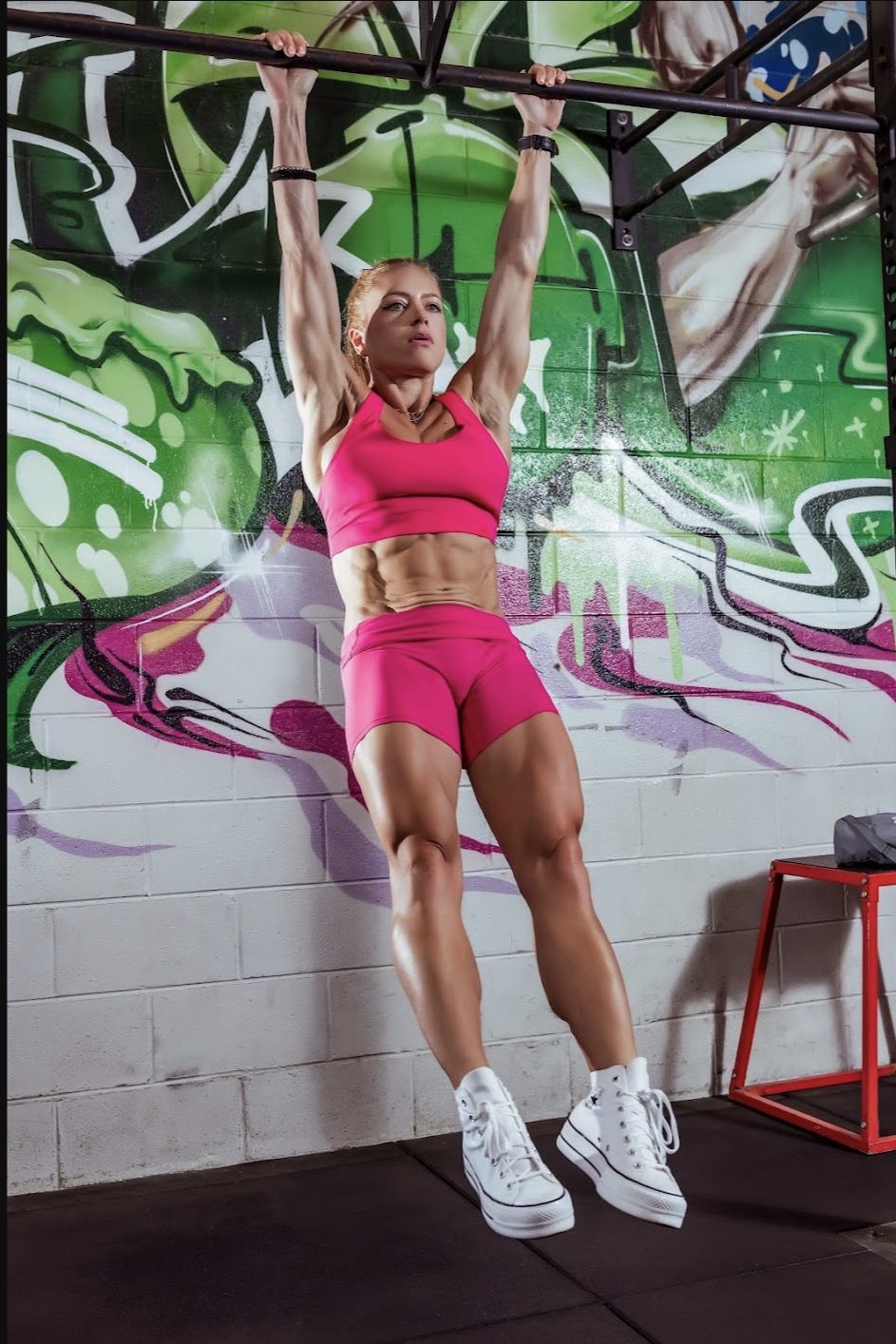
I am an Accredited Practising Dietitian (APD) in Australia with a Master of Nutrition & Dietetic Practice from Bond University and a Bachelor’s degree in Nutrition & Dietetics from the Central University of Venezuela.
For more than seven years, clinical dietetics has remained part of my professional work in Australia. At the same time, I have coached hundreds of women in nutrition, fat loss, body composition, strength and long-term behaviour change.
That combination matters because most women do not live inside one neat category. You can need evidence-based nutrition and still emotionally eat. You can lose significant weight and still struggle with body image. You can use a GLP-1 and still need to learn how to train, fuel yourself, preserve muscle and navigate the return of appetite.
You can be exceptionally successful professionally and still feel as though food is the one thing you “should” have figured out by now. That is the work I care about.
I’m not writing this from the finish line.
I know the all-or-nothing cycle from the inside. Not from a textbook.
I was born and raised in Venezuela, an only child raised by my mum, and I started my career in dietetics there. Thirteen years ago I moved to Australia and, in a lot of ways, I was no one. New country, new language, new health system. I rebuilt my career from scratch, completed my Master’s at Bond University and became an Accredited Practising Dietitian.
What most people don’t see: I struggled with my relationship with food for a long time, including bulimia as a teenager. I’ve also had a very fit body before, built on restriction, hours of daily exercise, a thousand food rules and a pretty miserable social life. From the outside it looked like discipline. Inside, it was fear. It was control.
It took me around 11 years to rebuild my relationship with food, my body and training. To learn the difference between structure and obsession. Between commitment and punishment.
In 2024 I stepped on stage as a wellness competitor, something I once thought I could only achieve by hurting myself. In 2025 I competed again, at Amateur Olympia Japan. I did it slowly, with enough food, and with a coach to stop me getting in my own way. It wasn’t perfect. Old patterns showed up, and I had to treat them as information, not proof that I was broken.
The goal matters. But who you become while chasing it matters more.
I still wrestle with impostor syndrome and the feeling of being “behind”. I’m a perfectionist who is learning that not giving up doesn’t always mean pushing harder. Sometimes it means grace.
That is exactly the work I do with my clients: ambitious women who are brilliant at everything except food, and who don’t need more punishment. They need better systems, more self-trust and a plan that survives real life.
I haven’t arrived. But I’ve become someone I respect. I’d love to help you do the same.
Why InsideOut exists
For years, I watched women receive more information when information was not the missing piece: another calorie target, meal plan, rule or reason to believe that more discipline would finally make everything work.
The women I work with are often already incredibly disciplined. They run businesses, treat patients, manage teams, raise families, train, travel and solve complicated problems all day.
Structure without rigidity
Enough clarity to move forward without making every decision a test of willpower.
Strength, not just shrinking
Build a capable body and skills that support it—not only a lower scale number.
Skills for real life
Strategies that remain useful when appetite, medication, work, stress or life changes.
Professional background
Credentials
Accredited Practising Dietitian (APD), Australia.
Education
Master of Nutrition & Dietetic Practice, Bond University.
Bachelor’s Degree in Nutrition & Dietetics, Central University of Venezuela.
Clinical practice
More than seven years of clinical dietetic practice in Australia, including private-hospital experience.
Education + research interpretation
Research-review, education, interviews and podcast conversations across evidence-based nutrition and fitness.
My current focus
Today, I work primarily with high-achieving women 35+: business owners, founders, executives, doctors, nurses, allied health professionals and other women balancing demanding work with family and training.
Some are using GLP-1 medications. Some are preparing to reduce or discontinue them with their prescriber. Some have never used one.
What connects them is deeper: they are used to being capable, but food, body image, weight or consistency still takes up far more mental energy than they want it to.
My goal is not simply to make that woman smaller. It is to help her become fit, strong and more confident in her ability to take care of herself without perfect conditions.
My approach to GLP-1s
GLP-1 medications can be valuable medical tools. They can also create a window in which appetite and food noise are very different from what a person previously experienced.
My role is to help with the pieces that still matter around medication: adequate nutrition, protein, strength training, muscle preservation, body composition, food relationship, behavioural skills, long-term maintenance and adapting when appetite or circumstances change.
Prescriber boundary: medication decisions—including starting, stopping and dose changes—remain with the prescribing clinician.
Evidence matters. So does implementation.
I care about research. I also care about whether a strategy survives a 12-hour shift, a business trip, a difficult week, poor sleep, a restaurant meal and a Wednesday when motivation is nowhere to be found.
The question is not only, “What would be optimal?” It is also, “What will this woman realistically be able to keep doing?”
Work with me
If you are a high-achieving woman 35+ who wants personalised support across nutrition, strength, body composition and the behaviours underneath consistency, apply below.